Fat loss after 50: do you really need to work harder?
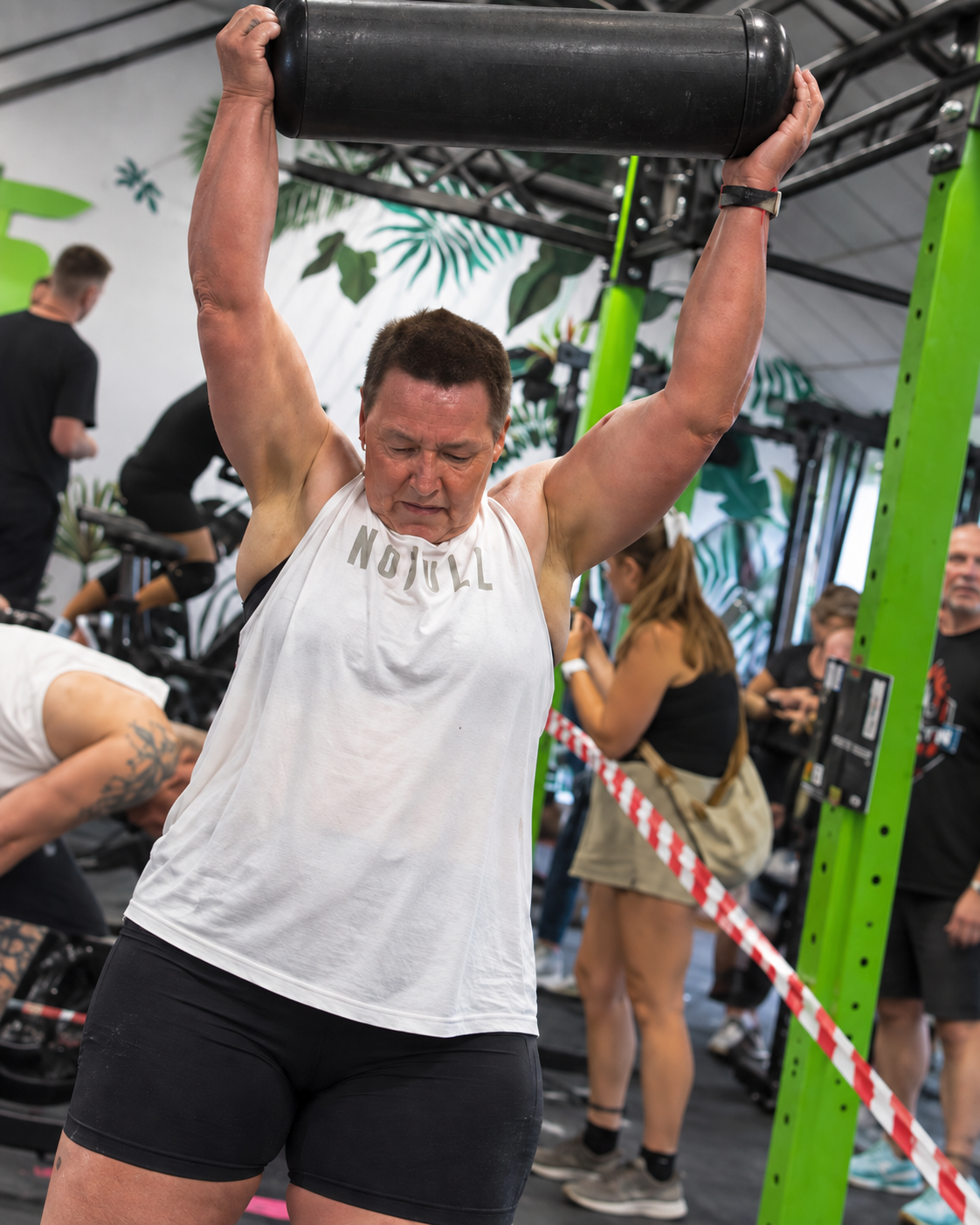
The photograph below is me competing in a DEKA event. I enjoy training hard and challenging myself—but I don’t do it because it is compulsory for fat loss.
You do not need to throw a10kg RAM over your head, exhaust yourself in every session or live on salad to lose weight after 50.
In fact, constantly trying to eat less and exercise harder may be part of what makes the whole process feel so difficult.
Does your metabolism suddenly slow down?
Fat loss can certainly feel harder as we get older, but it is too simplistic to blame everything on a “broken metabolism.”
One large study measuring daily energy expenditure across the lifespan found that, after allowing for body size and composition, energy expenditure remained relatively stable from approximately 20 to 60. After 60, the decline was gradual—not a sudden metabolic cliff.
What often changes is everything surrounding our metabolism.
We may move less during the day, lose some muscle, sleep badly, experience more stress or recover less easily from exercise. Injuries can affect what we are able to do. Years of restrictive dieting can also leave us alternating between being “good” and abandoning the plan altogether.
All these small changes can influence the balance between the energy we consume and the energy we use.
What about menopause?
Hormonal changes do matter, but they do not make fat loss impossible.
Research following women through the menopause transition found changes in body composition, including an increase in fat mass, a reduction in lean mass and a greater tendency to carry fat around the middle.
The scales may not tell the full story. Your weight could change relatively little while your proportions, waist measurement and how your clothes fit begin to feel different.
Menopause can also affect sleep, mood, appetite and energy. That can make planning meals, staying active and recovering from training more difficult—even if your basic metabolism has not dramatically collapsed.
These are genuine challenges. They require a more intelligent approach, not punishment.
What actually works?
1. Create a calorie deficit you can maintain
Fat loss still requires your body to use more energy than it receives over time. But the deficit does not need to be enormous.
Very low-calorie plans may produce a quick initial result, but they can be difficult to sustain and may increase hunger, tiredness and the risk of losing muscle.
A smaller, consistent deficit that allows you to eat normal meals, enjoy your life and continue training is usually far more useful than an extreme plan you repeatedly stop and restart.
2. Prioritise strength training
Strength training becomes increasingly important as we age. It helps us retain or build muscle, maintain bone strength and preserve the ability to do everyday things confidently.
This does not mean that muscle turns your metabolism into a roaring furnace—the calorie-burning effect is often exaggerated. Its real value is protecting your body while you lose fat and helping you remain strong, capable and independent.
The UK physical activity guidelines recommend muscle-strengthening activity on at least two days each week. That training should be appropriate for your current ability; it does not need to be extreme.
3. Eat enough protein
Protein supports muscle repair and helps protect lean tissue when you are losing weight. It can also make meals more satisfying.
Rather than becoming obsessed with one perfect number, include a useful protein source in each main meal—such as eggs, fish, meat, dairy, tofu, beans or lentils—and adjust the amount to your needs and preferences.
4. Increase ordinary movement
Formal exercise is only part of daily energy expenditure.
Walking, taking the stairs when comfortable, gardening, housework and simply spending less time sitting can make a meaningful difference when repeated consistently.
You do not have to “smash” every workout. Regular movement that your body can recover from is often more sustainable than repeatedly exhausting yourself and then becoming inactive for the rest of the day.
5. Stop expecting perfection
One higher-calorie meal does not cause failure, just as one workout does not create fitness.
Look at what happens across the week. If most of your meals support your goal, you remain reasonably active and you train consistently, there is room for meals out, celebrations and foods you enjoy.
The plan has to work within your real life—not the imaginary week in which nothing goes wrong.
Work smarter, not simply harder
After 50, the answer is rarely to punish your body more.
The better approach is to understand where you are now, protect your muscle, choose exercise you can recover from and create eating habits you can genuinely maintain.
You may still choose to train hard—I certainly do sometimes—but it should be because you enjoy the challenge, not because you believe you must suffer to earn fat loss.
Build coaching is designed around the person you are now: your experience, lifestyle, injuries, preferences and goals. If you would like help creating a realistic plan for fat loss and strength, get in touch.
