Losing Weight? Don’t Lose the Muscle With It.
Weight-loss injections are everywhere.
Ozempic, Wegovy, Mounjaro — whether you use them, dislike them, are considering them or simply keep hearing about them, there’s no denying that GLP-1 medications have changed the conversation around weight loss.
And they can produce significant weight loss.
But there’s another question worth asking:
What exactly are you losing?
Because when the scales go down, it isn’t necessarily all body fat.
Weight loss isn’t the same as fat loss
When we lose a significant amount of body weight, we usually lose a mixture of fat and lean tissue.
That isn’t unique to weight-loss injections. It happens with conventional dieting too.
A 2026 review of 20 randomised controlled trials involving more than 15,000 people found that lean mass accounted for around 25–39% of the weight lost with drugs such as semaglutide and tirzepatide.
But here’s the important bit. People losing weight through lifestyle interventions also lost lean mass. So the evidence doesn’t support the dramatic claim that weight-loss injections simply “eat your muscle”.
Significant weight loss itself can involve some loss of lean tissue.
But there was one particularly interesting finding
When lifestyle intervention included resistance training, lean mass accounted for only around 17.5% of the weight lost.
In other words, strength training appeared to substantially improve the quality of that weight loss by helping preserve lean tissue.
And that matters whether you’re using medication or losing weight without it.
The aim isn’t just to lose weight. It’s to lose fat while keeping as much muscle as possible.
Why does muscle matter so much?
Muscle isn’t just about looking toned or being able to lift heavy weights.
It helps us get out of a chair, climb stairs, carry shopping, maintain balance and stay physically independent.
And preserving it becomes increasingly important as we get older.
If you successfully lose a considerable amount of weight but unnecessarily lose muscle and strength along with it, you’ve potentially missed part of the opportunity.
The goal shouldn’t simply be a smaller body. It should be a healthier, stronger and more capable one.
Lose the weight. Keep the muscle.
This is personal for me too.
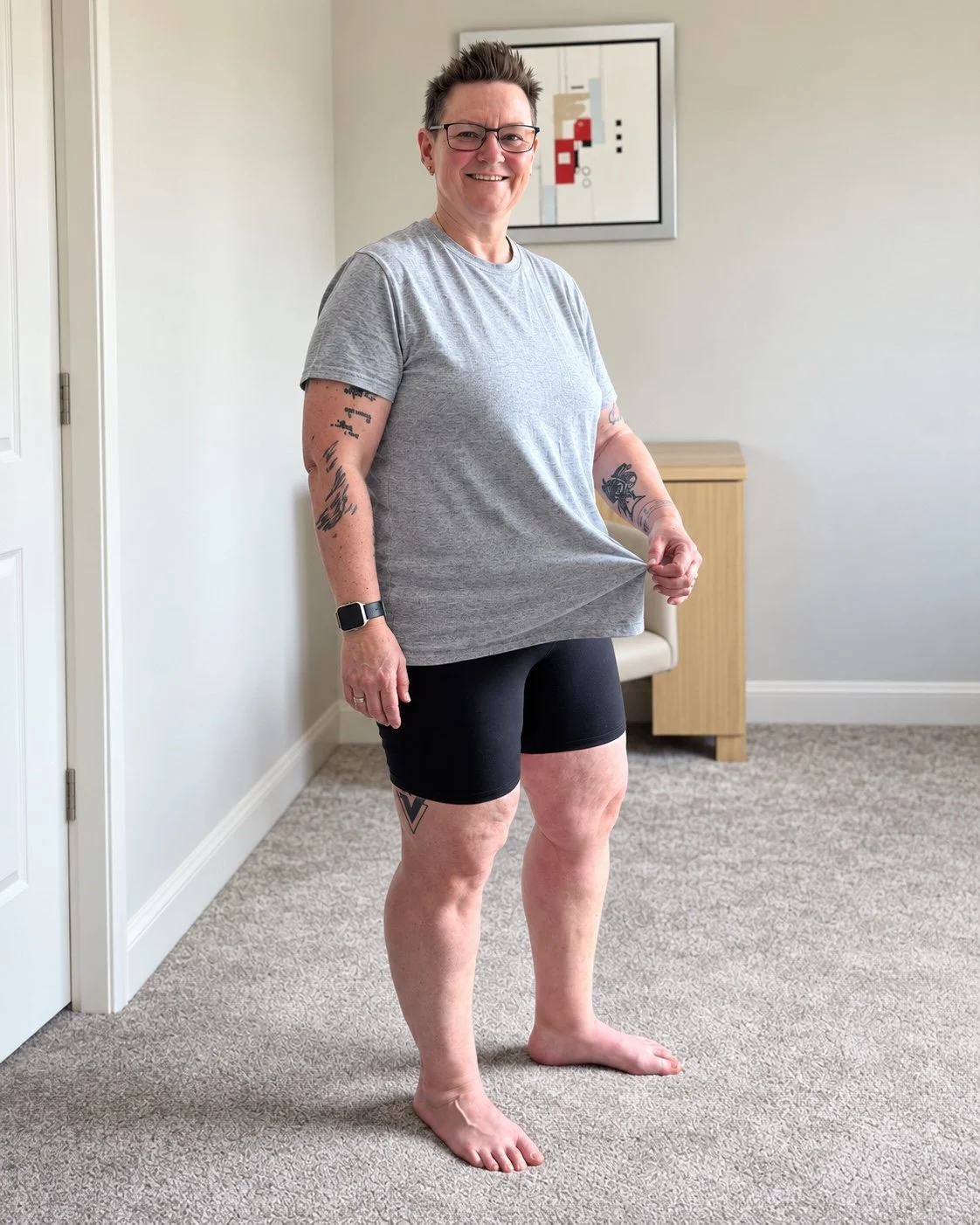
Over the last nine months, I’ve lost around 6kg.
Not dramatic. Not quick. And certainly not the sort of transformation that makes exciting weekly scale updates.
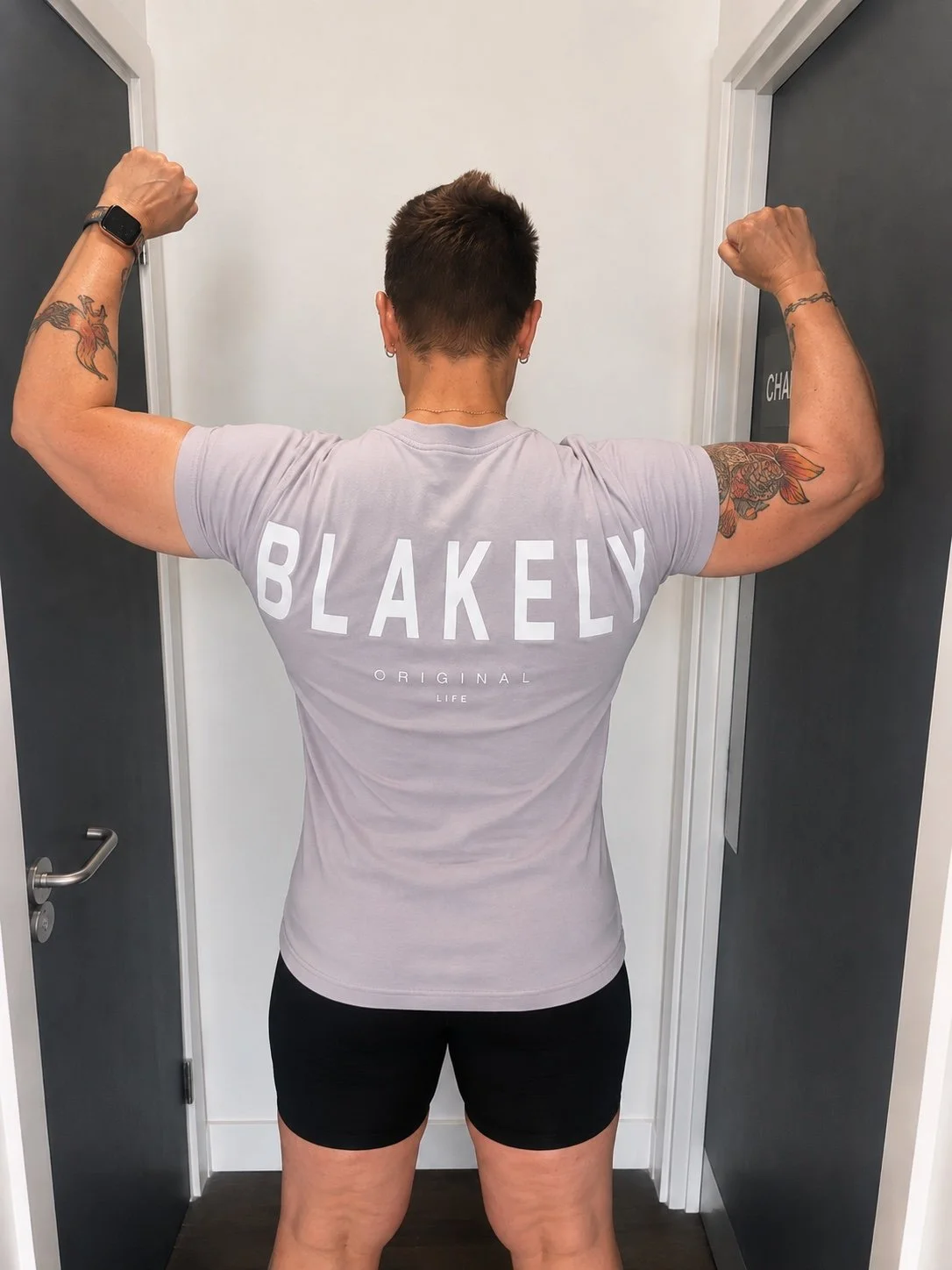
But I’ve preserved my lean mass and got stronger.
And now something interesting is happening.
People are noticing.
Clothes that fitted now hang differently. My shape is changing. And underneath it, I’ve kept the muscle I’ve spent years building.
That’s exactly what I wanted.
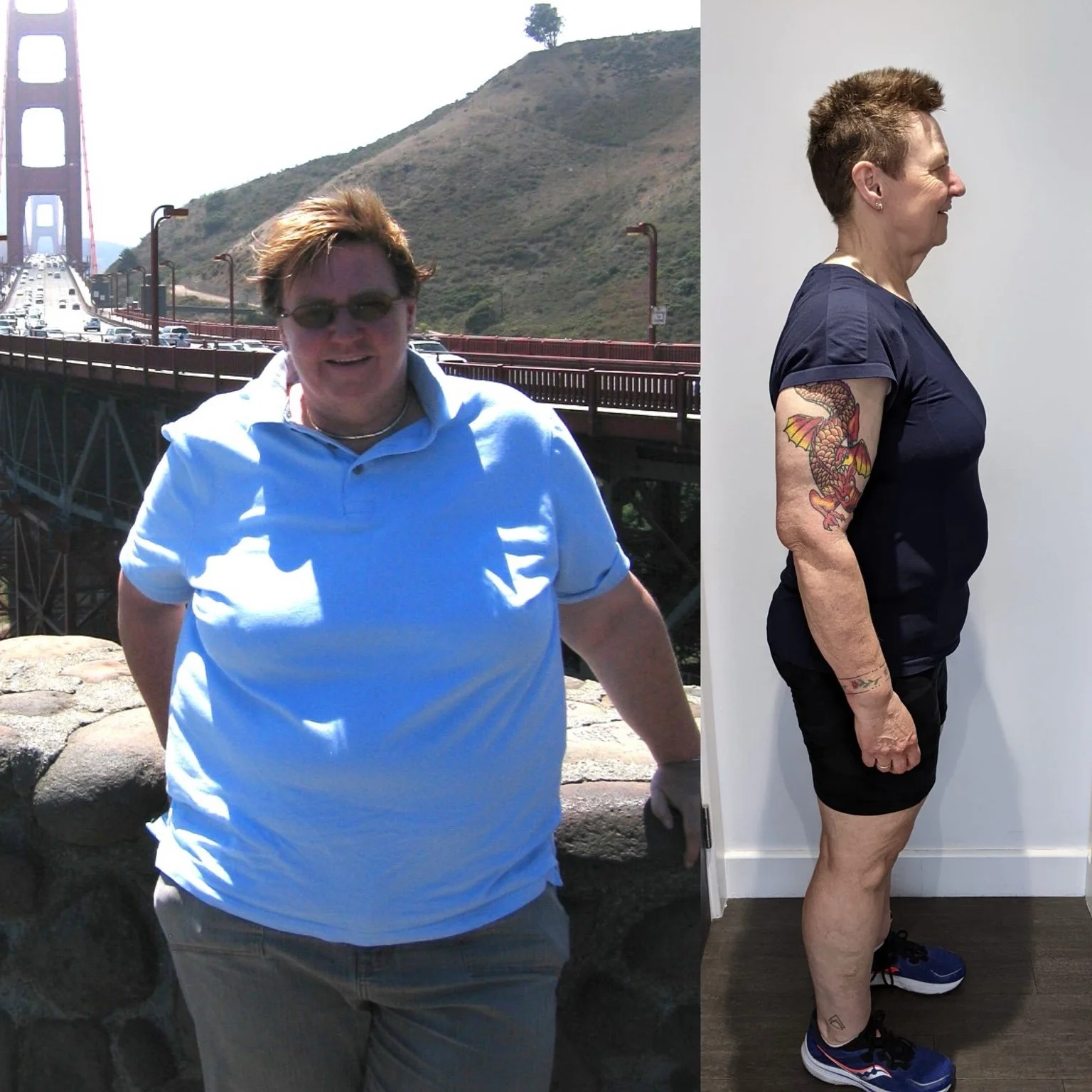
I’ve lost a lot more weight over the course of my life, as the older photo shows.
But these last nine months haven’t been about getting as light as possible, as quickly as possible. They’ve been about improving my body composition while continuing to strength train, prioritise protein and live normally. At 61, I have absolutely no interest in sacrificing muscle just to make the scales move faster.
I want to lose fat. I want to keep my muscle. And I want to keep getting stronger.
Six kilos in nine months might not sell many “rapid transformation” programmes. But I’ll take this kind of progress every time.
So what should we actually do?
Whether weight loss comes through medication, calorie control, increased activity or a combination of approaches, the principles are remarkably similar.
Strength train regularly. Give your body a reason to keep its muscle.
Eat enough protein. Particularly important if a reduced appetite means you’re eating much less than before.
Don’t chase the fastest possible loss. Faster isn’t automatically better.
Keep an eye on strength and function, not just body weight. Can you still lift, move and perform as well — or better — than before?
And remember that walking and cardiovascular exercise are fantastic for health and fitness.
But resistance training has a different job.
It tells your body: “I still need this muscle.”
Build for the body you want to keep
For years, we’ve celebrated weight loss almost entirely by the number on the scales.
Two stone lost. A smaller dress size. A new lowest weight.
Those achievements can absolutely matter.
But perhaps we should also be asking:
Am I stronger?
Am I fitter?
Can I do more?
Am I building a body that’s going to serve me well in 10, 20 or 30 years?
My own 6kg has taken nine months.
I’m absolutely fine with that.
Because successful weight loss isn’t simply about becoming lighter.
It’s about coming out of the process healthier, stronger and better equipped for the years ahead.
That’s what Build to Last means.
Sources & further reading
Lean Mass Changes With Incretin Therapy Versus Lifestyle Intervention (2026)
Systematic review and meta-analysis of 20 randomised controlled trials involving 15,782 participants.
Nutritional Priorities to Support GLP-1 Therapy for Obesity (2025)
Joint advisory from the American College of Lifestyle Medicine, American Society for Nutrition, Obesity Medicine Association and The Obesity Society.
Please note: This article is for general information and isn’t medical advice. Anyone using or considering prescription weight-loss medication should discuss their individual treatment with an appropriate healthcare professional.
